Piercing guides
DAITH PIERCING GUIDE
This piercing guide covers everything you need to know about daith piercings including recommended jewellery types, size guides, materials, our most frequently asked helix piercing questions, and styling inspiration.
Quick Daith Piercing Facts
Pain level: Moderate to high
Healing time: 9–12 months
Jewellery type: Cartilage hoop
Standard gauge: 1.2mm (16G)
Most popular Size Guide: Hoop 8mm
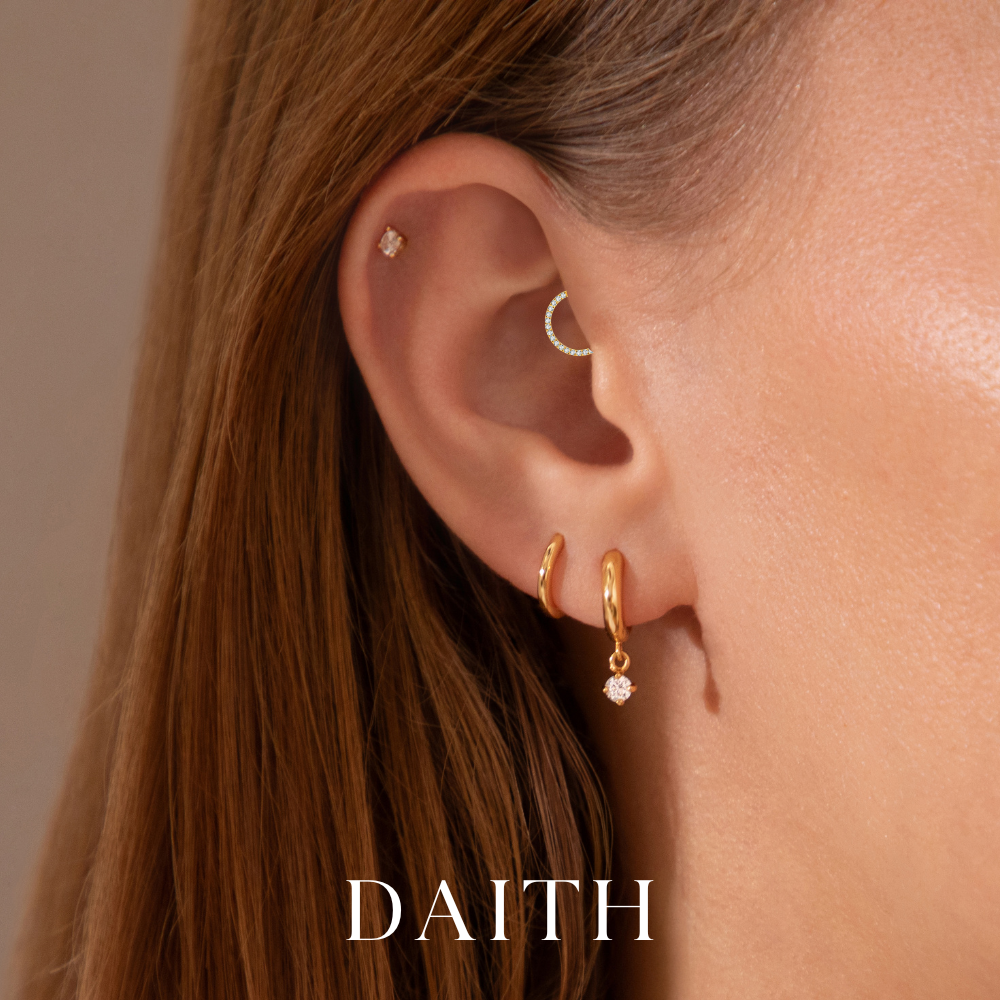
A daith piercing is a cartilage piercing located in the innermost fold of the ear, just above the ear canal. Due to its placement, it is a more anatomy-specific piercing and not every ear is suitable. A professional piercer will always assess the area before piercing.
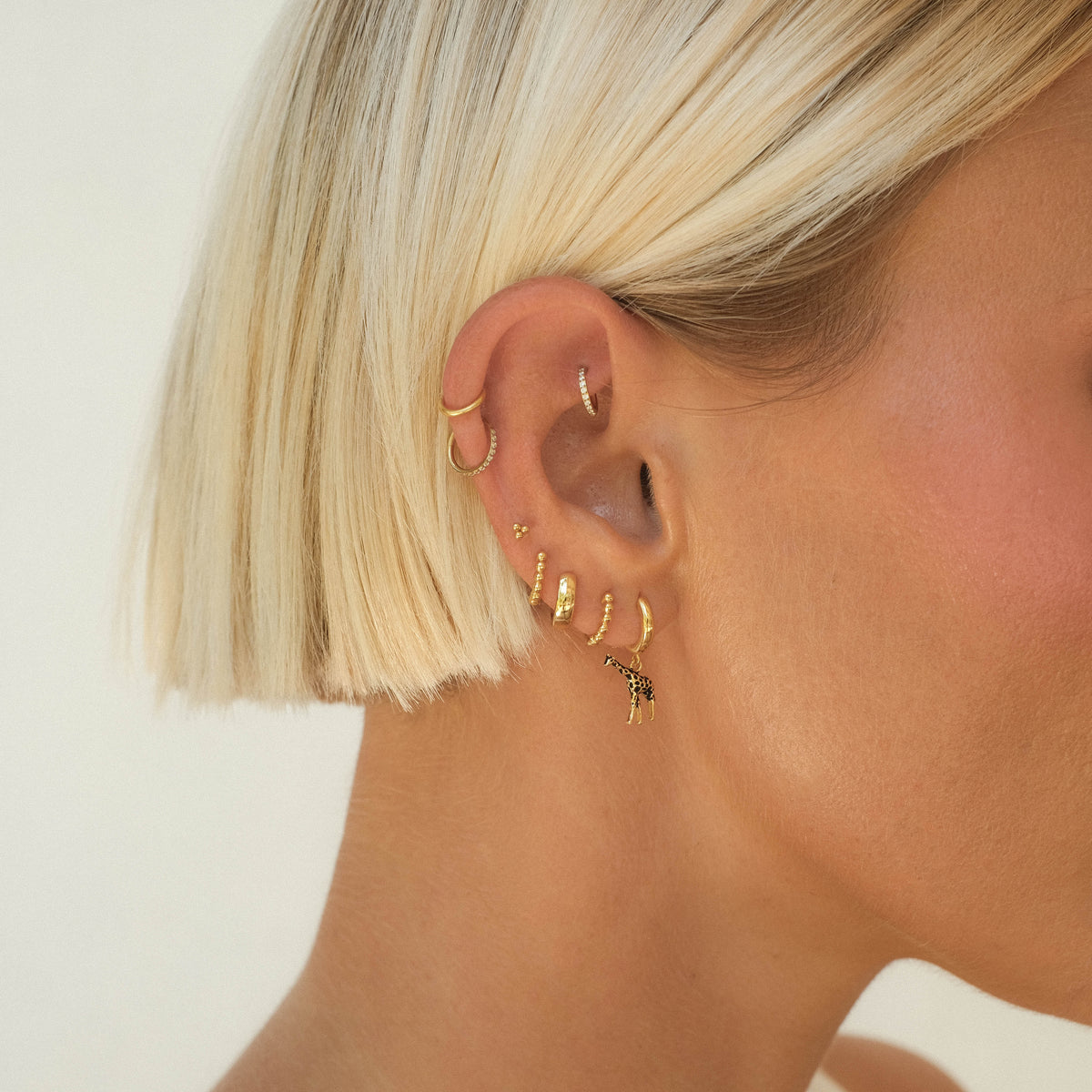
The daith is a popular choice for those looking to add detail to the centre of the ear rather than the outer edge. Its tucked-in position makes it visually distinctive and it works well alongside helix, conch and lobe piercings to create a balanced, curated ear.
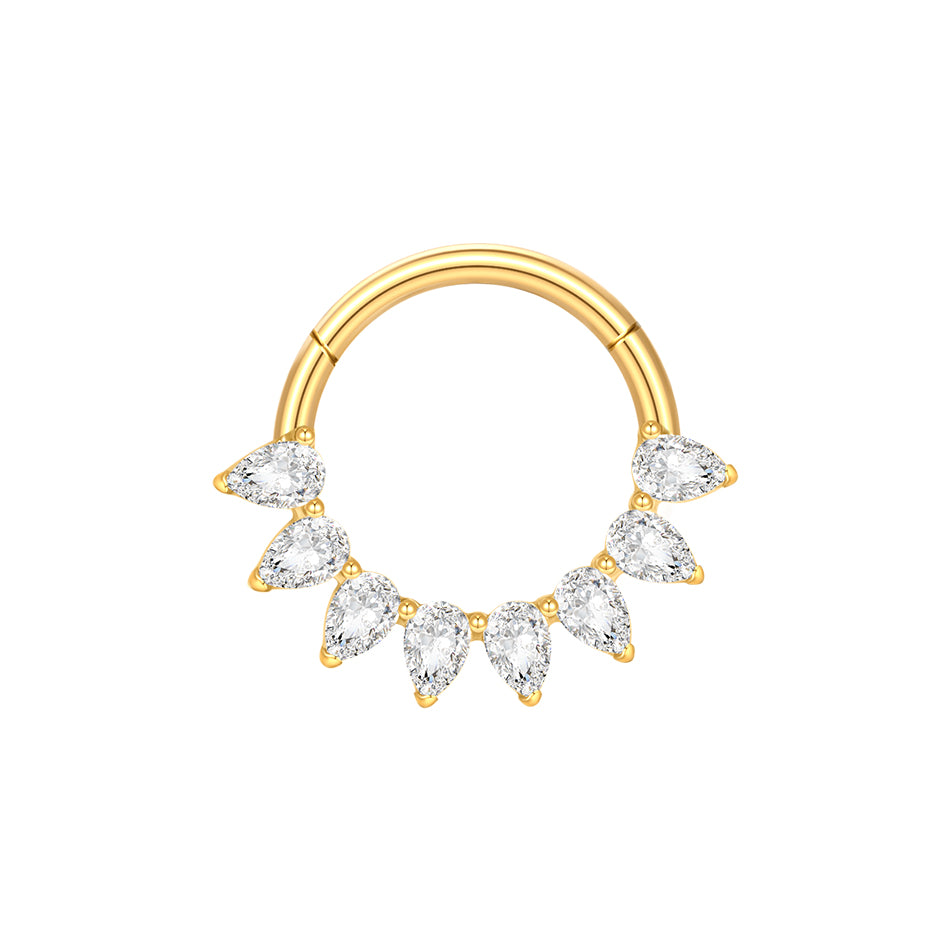
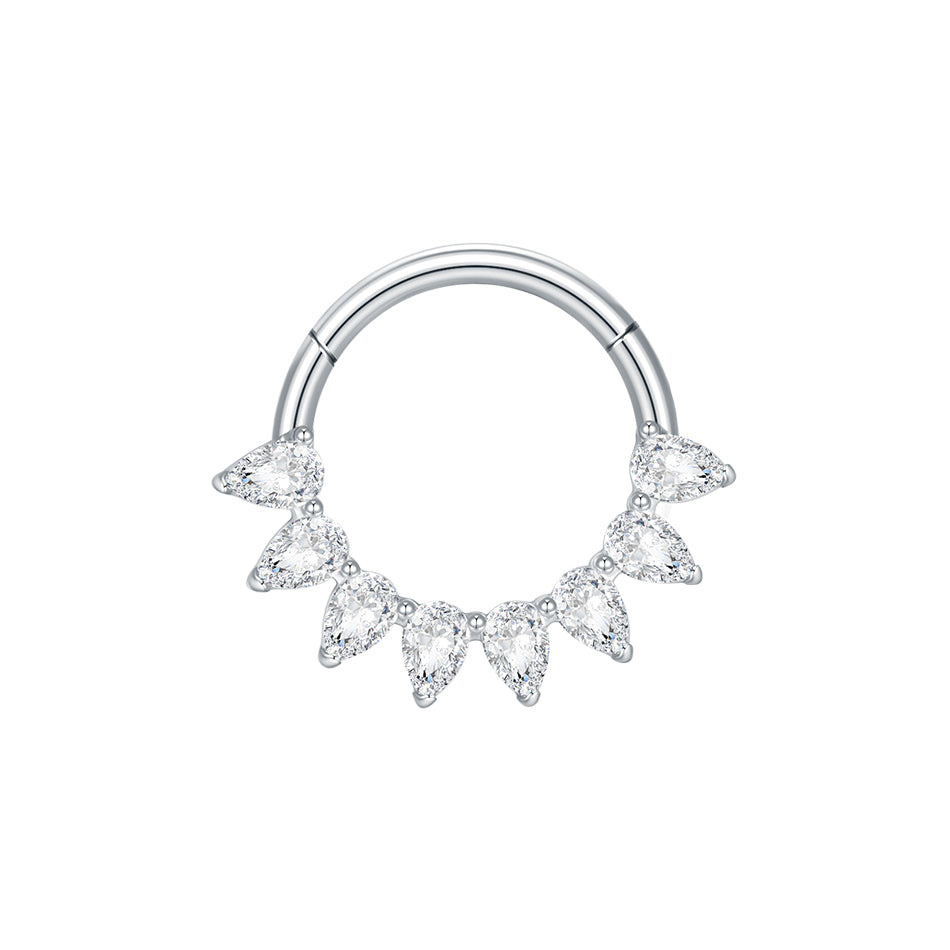
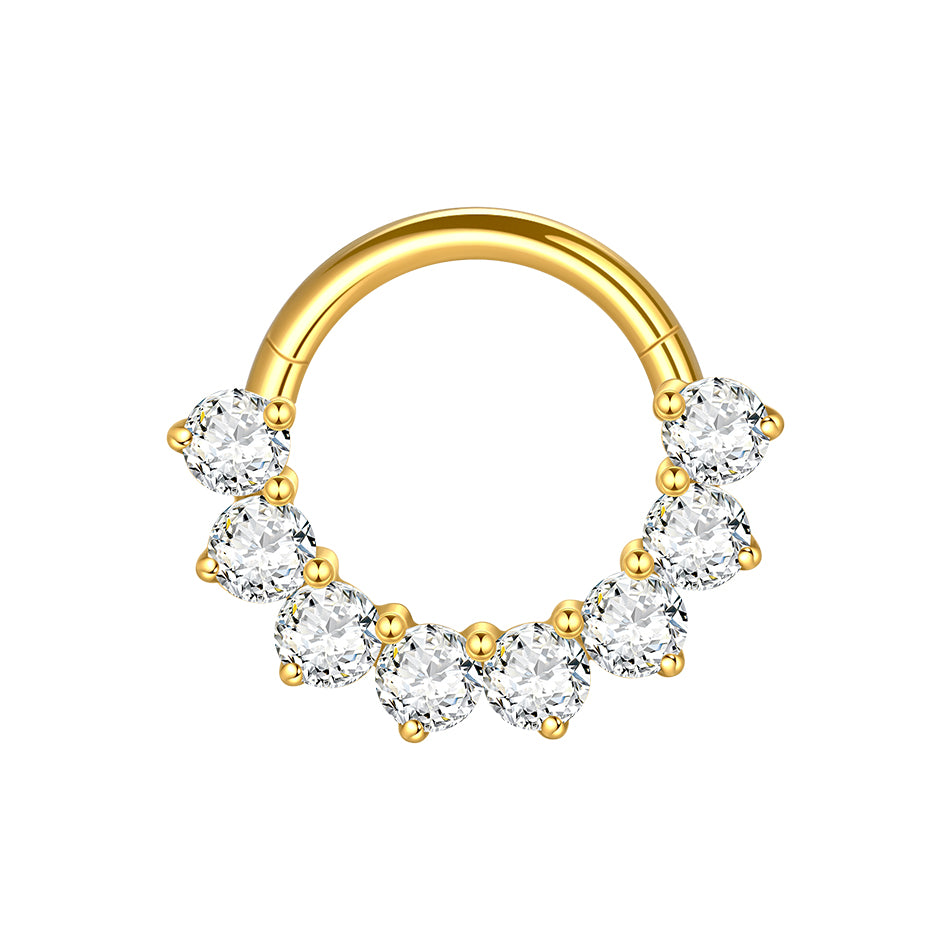
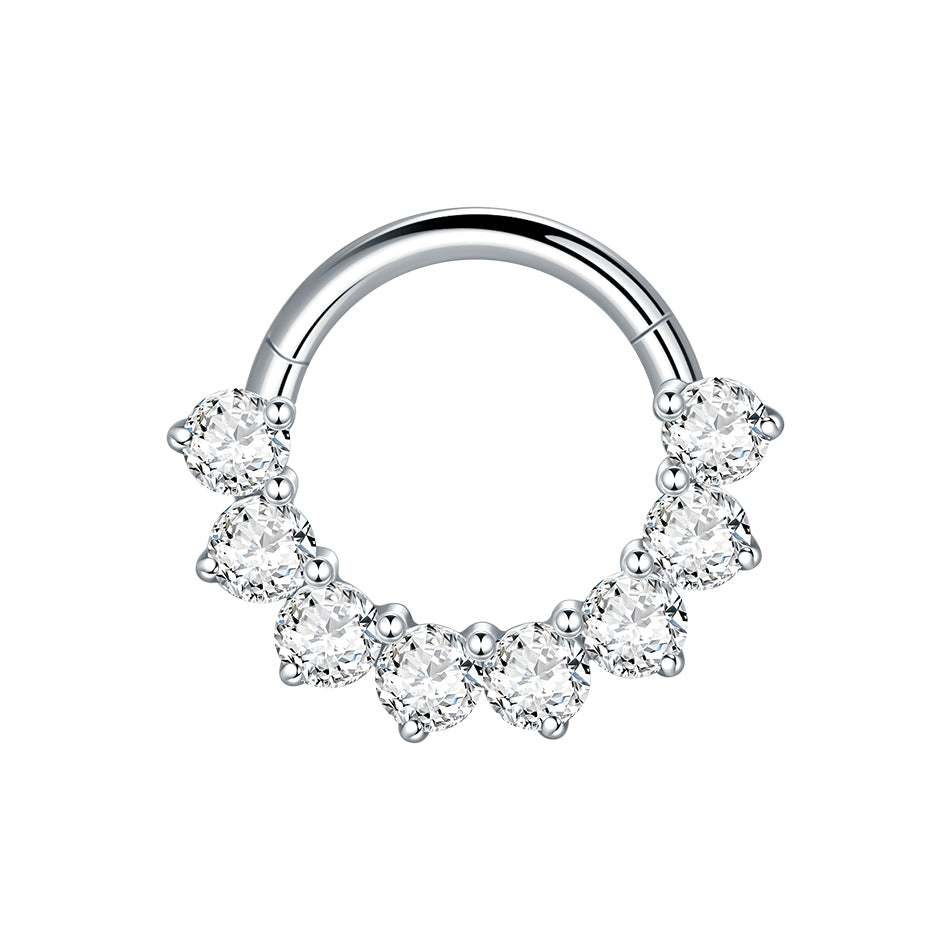
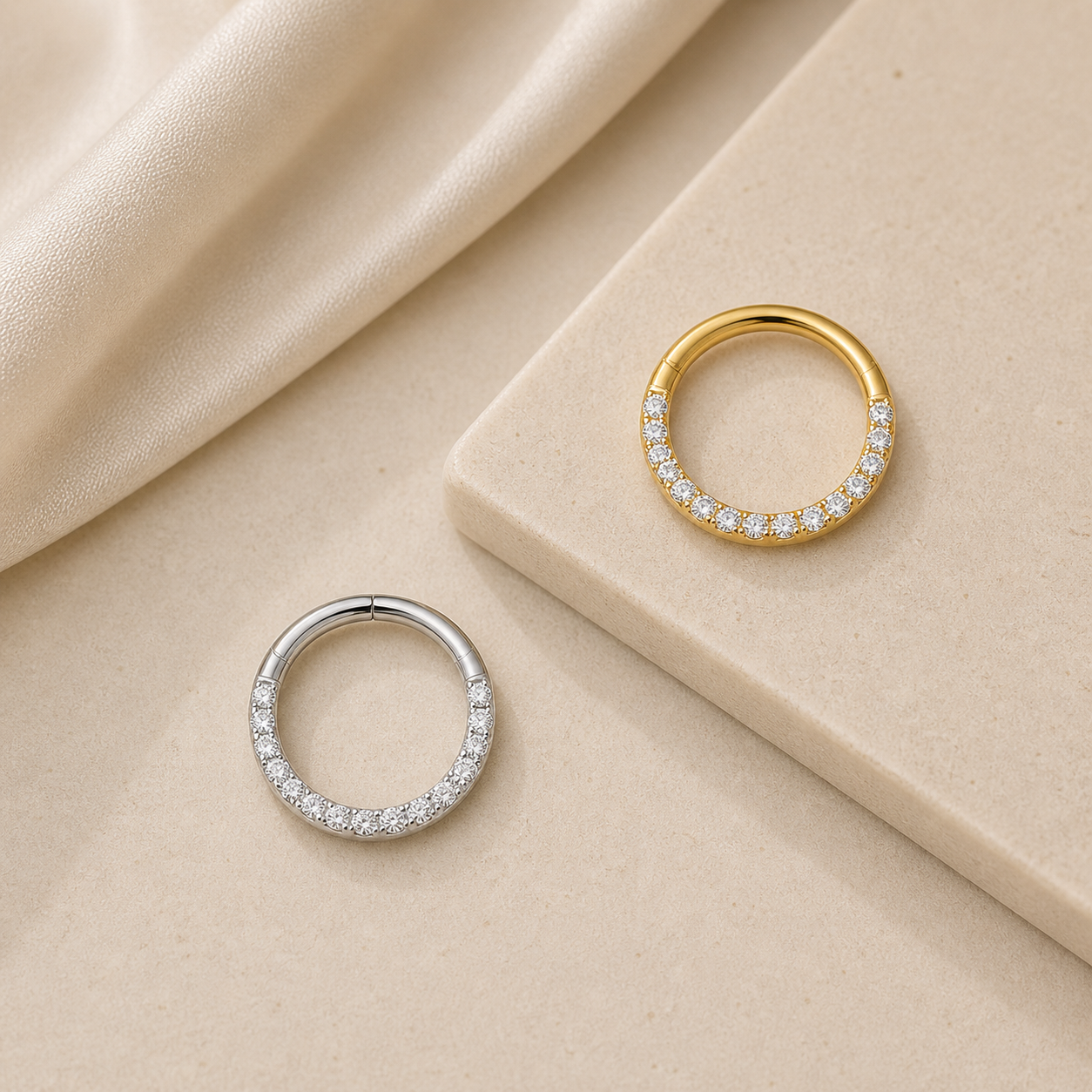
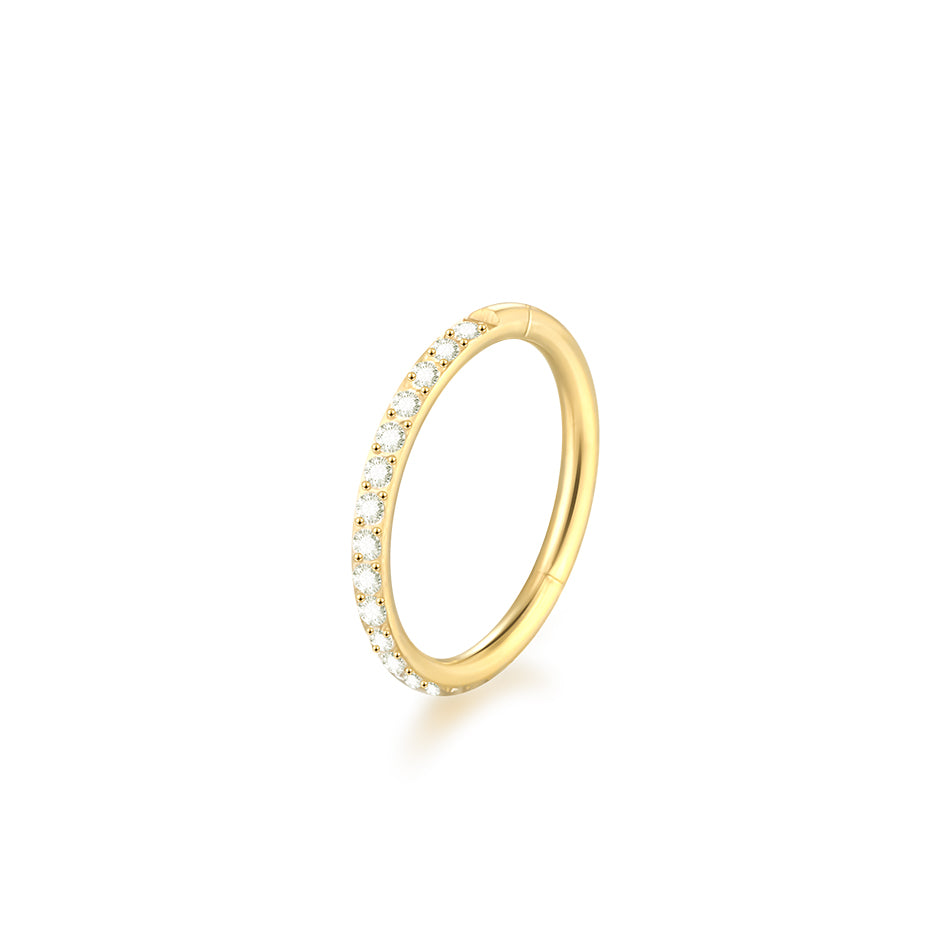
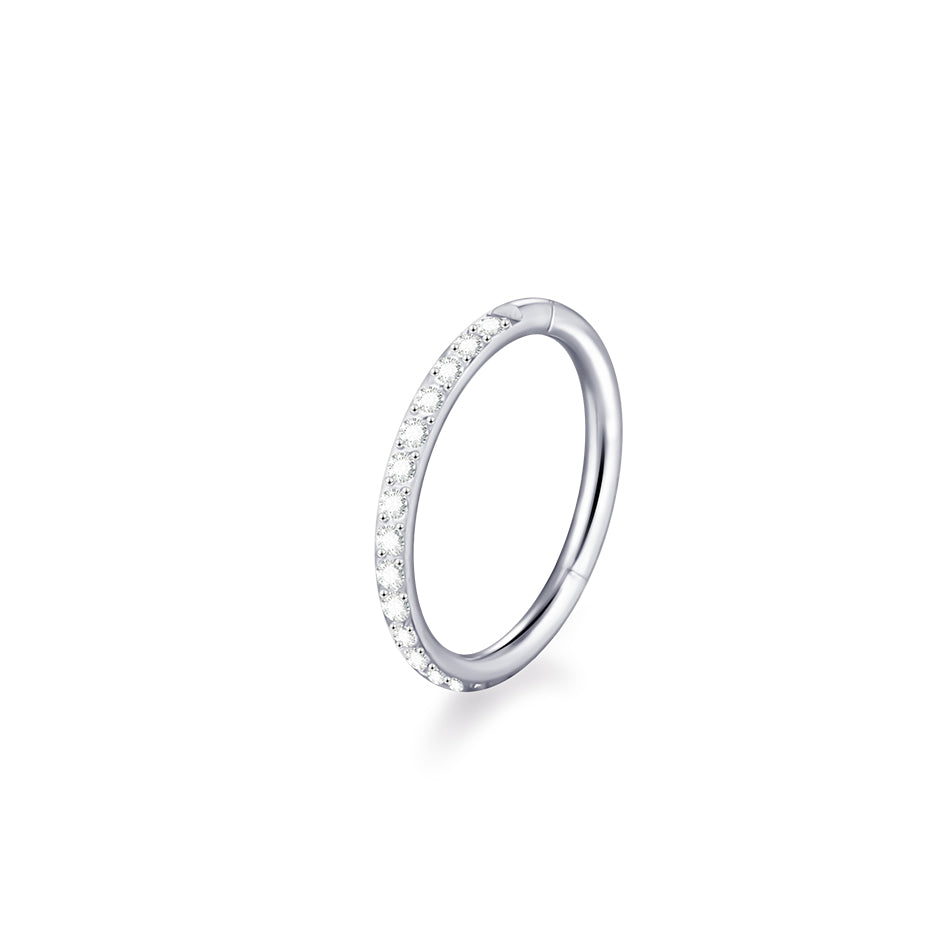
Daith piercings are most commonly worn with small hoops or clicker rings that sit neatly within the ear’s natural fold. While jewellery options are more specific than for outer cartilage piercings, different hoop diameters, finishes and decorative designs allow for a variety of styling options.
Daith Piercings & Migraines – What You Should Know
Daith piercings are often associated with migraine relief, based on the idea that the piercing passes through a pressure point linked to acupuncture. Some people report a reduction in migraine symptoms after getting a daith piercing.
However, there is no scientific or medical evidence to confirm that daith piercings can treat or prevent migraines
FAQ'S
most asked daith questions
Pain levels vary from person to person, but daith piercings are generally considered moderate. Due to the thickness of the cartilage and the placement close to the ear canal, you may feel strong pressure during the piercing rather than sharp pain. The piercing itself is quick.
Average healing time: 6–12 months. Initial swelling and tenderness are common during the first few weeks
Full healing can take up to a year, even if the piercing looks healed on the outside
Only change your jewellery once your piercing is fully healed. Changing too early can cause irritation, swelling and delayed healing. Consult your piercer if you are unsure.
Helix piercings can be tricky to change, especially with flat-back studs. Using a piercing insertion tool or stud grabber can help guide the post through the piercing and securely attach the front without dropping it. These tools make jewellery changes quicker, easier and more hygienic.
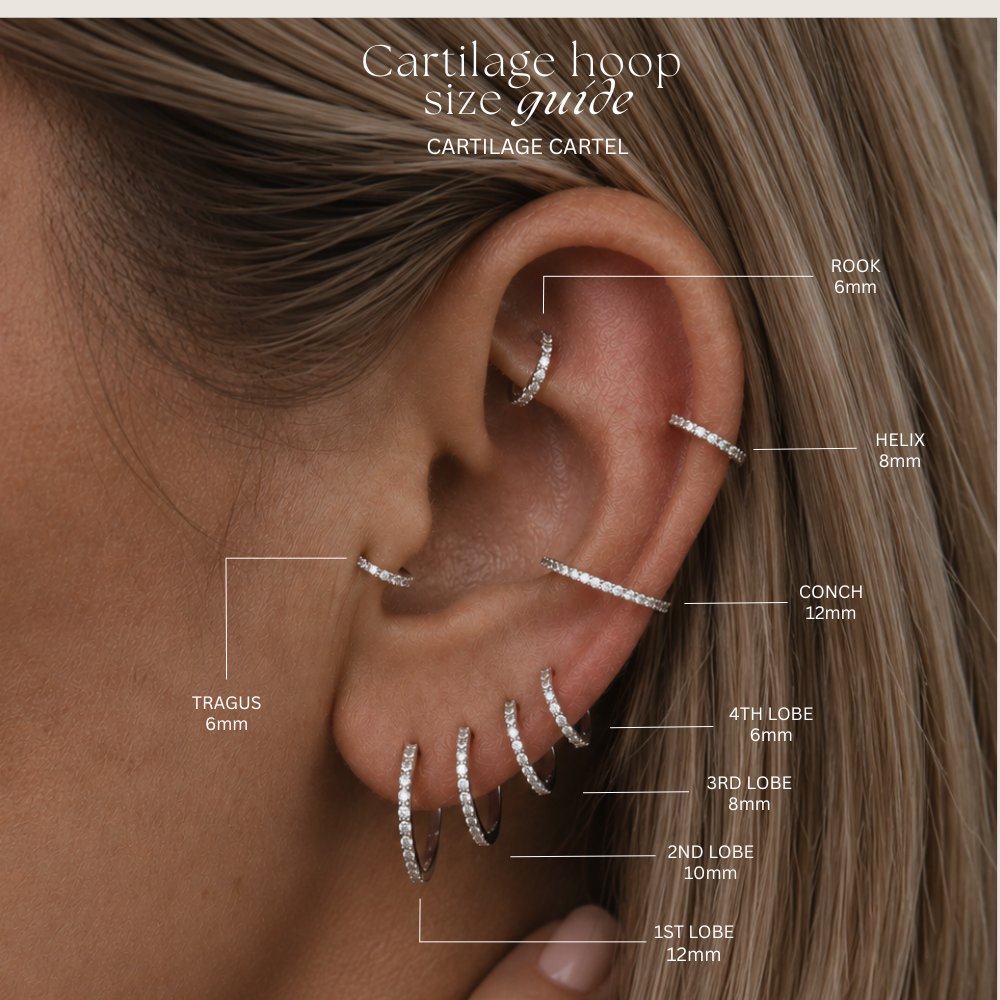
Daith piercings require a cartilage hoop. Recommended gauge 1.2mm and 8mm diametre is most common.
Featured collection
shop Daith Approved Jewellery