
The Essential Piercing Size Guide
Choosing the correct jewellery size is just as important as choosing the design. The right size reduces irritation, issues and safe healing, better comfort, fewer snags, and a cleaner, more elevated look.
This guide breaks down gauge (thickness), diameter, and post length in a clear, non‑confusing way with piercing‑specific recommendations so you can shop with confidence.
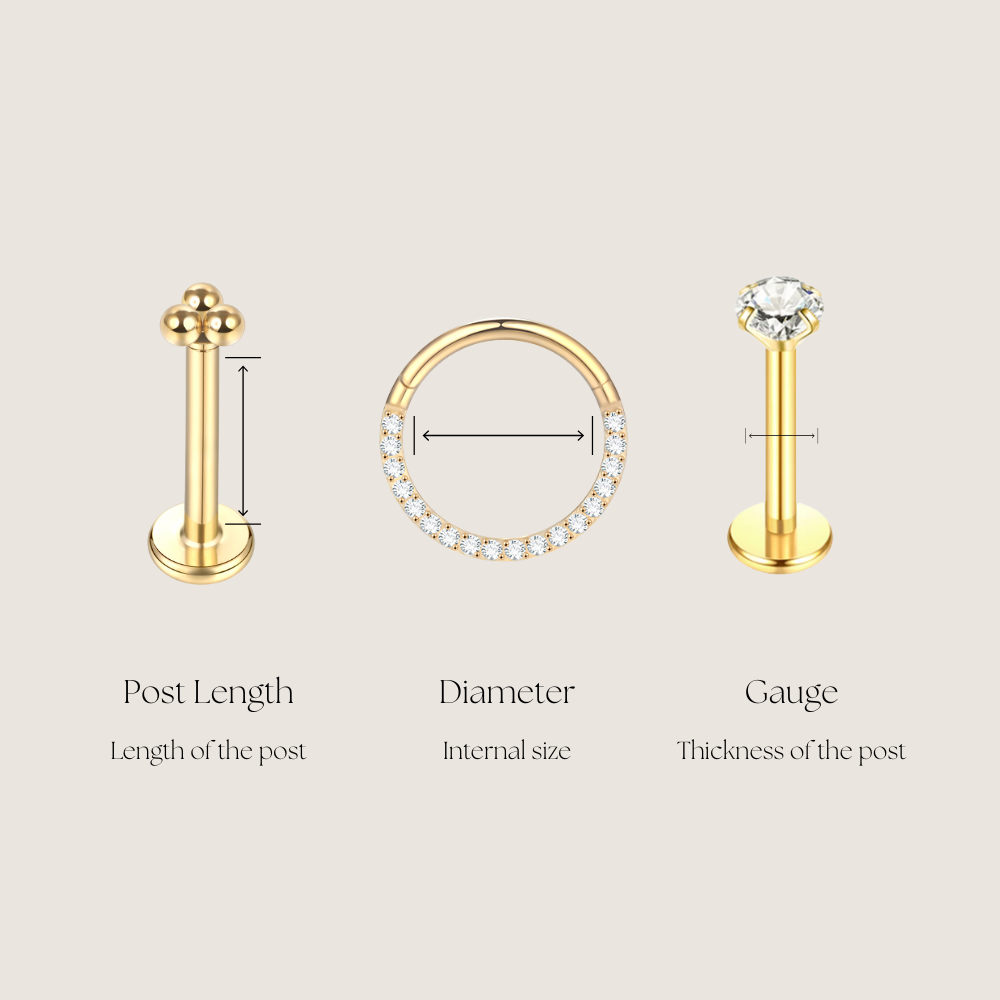
Understanding piercing sizes
The Basics
GAUGE: Gauge refers to how thick the bar or hoop is. Cartilage piercings require a different gauge to traditional lobe jewellery.
Measured in millimetres (mm) and labelled as mm/ (G) example: 1.2mm (16G)
DIAMETER : The inside width of the hoop. Controls how snug or loose the hoop sits.
POST LENGTH Measured from the base of the post to the back. Too short = pressure & irritation, Too long = catching & movement.
CARTILAGE HOOP SIZE GUIDE
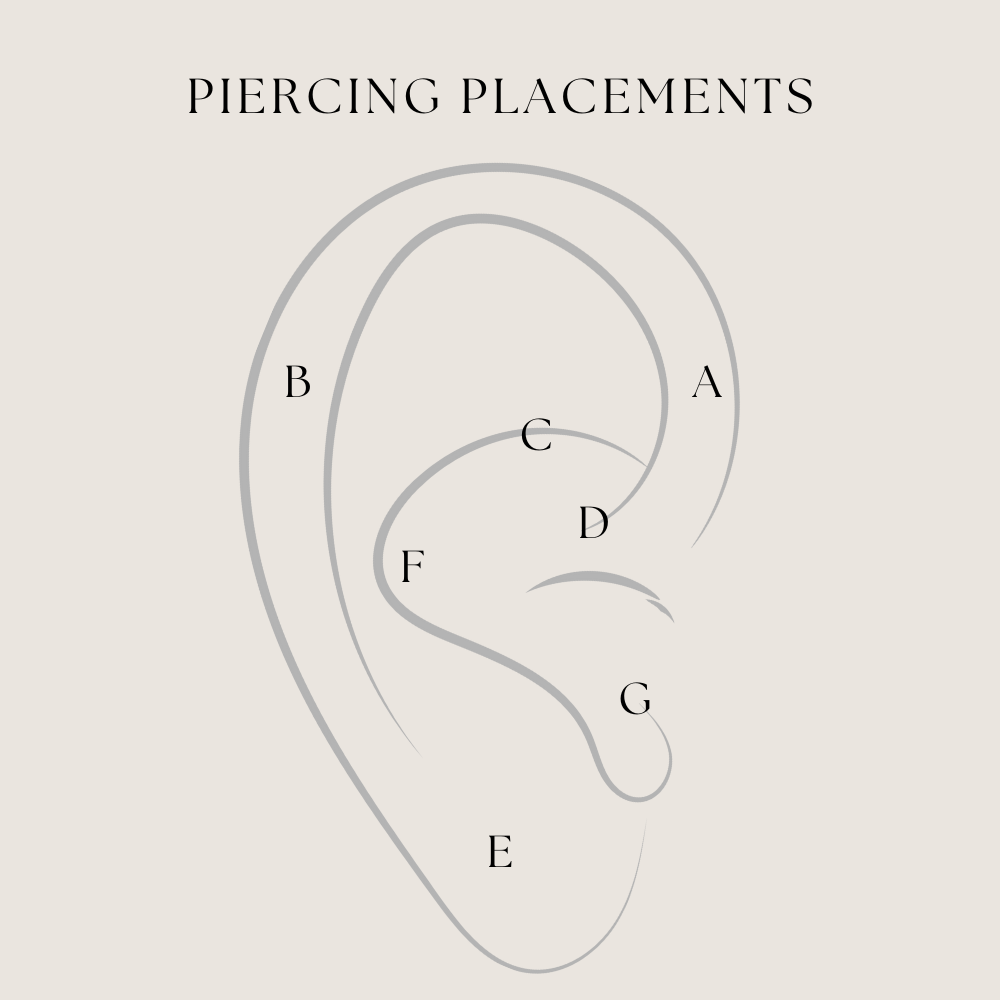
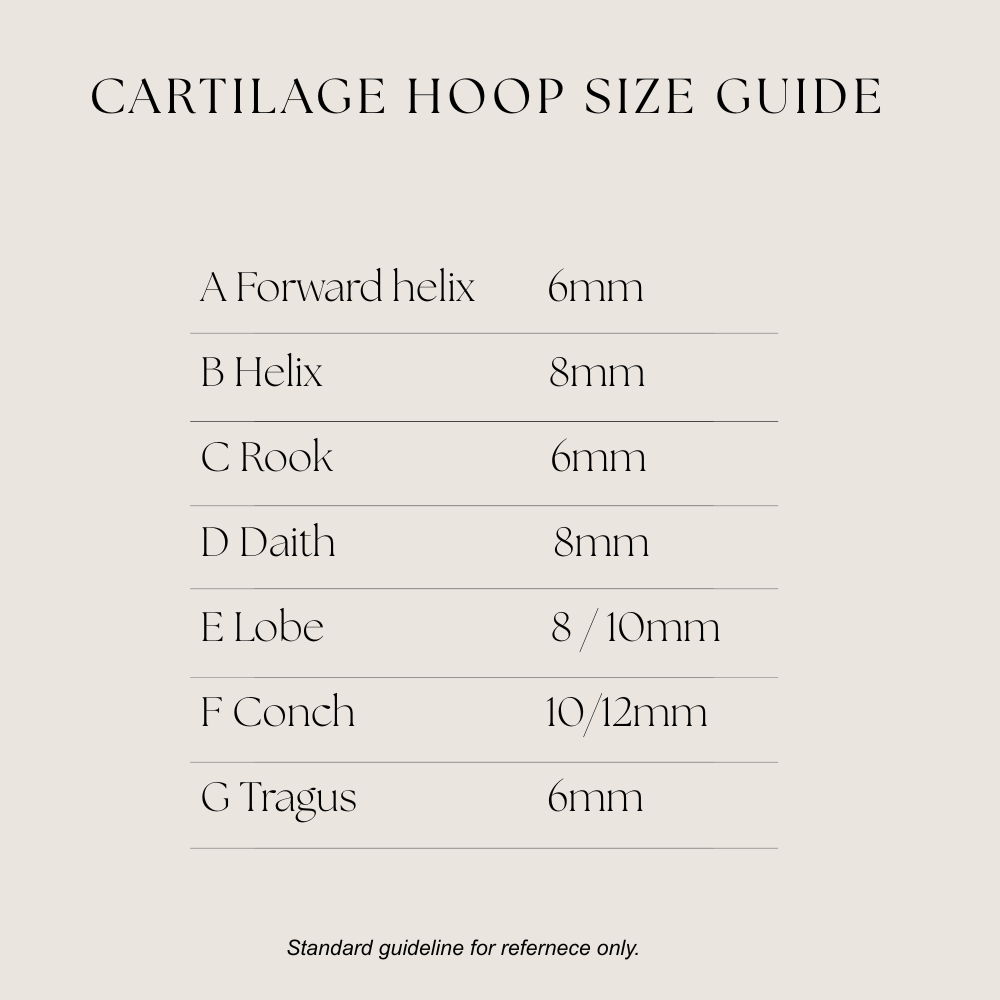
CARTILAGE HOOP SIZES EXPLAINED
Which gauge should I choose for my cartilage piercing?
For all ear cartilage piercings we recommend 1.2mm (16G) gauge which is the standard piercing thickness.
If your piercing was pierced with the incorrect size needle or you have been wearing butterfly back studs, your piercing hole may have shrunk and only be able to accommodate a thinner gauge such as 1.0mm or 0.8mm.
Which size hoop should I go for?
Helix 8mm most common. 6mm Snug fit. 10mm Loose fit.
Forward Helix 6mm most common. 8mm Loose fit.
Conch 10/12mm most common. 14mm loose fit.
Tragus 6mm most common.
Daith 8/10mm most common
Rook 6mm most common
CARTILAGE STUD SIZES EXPLAINED
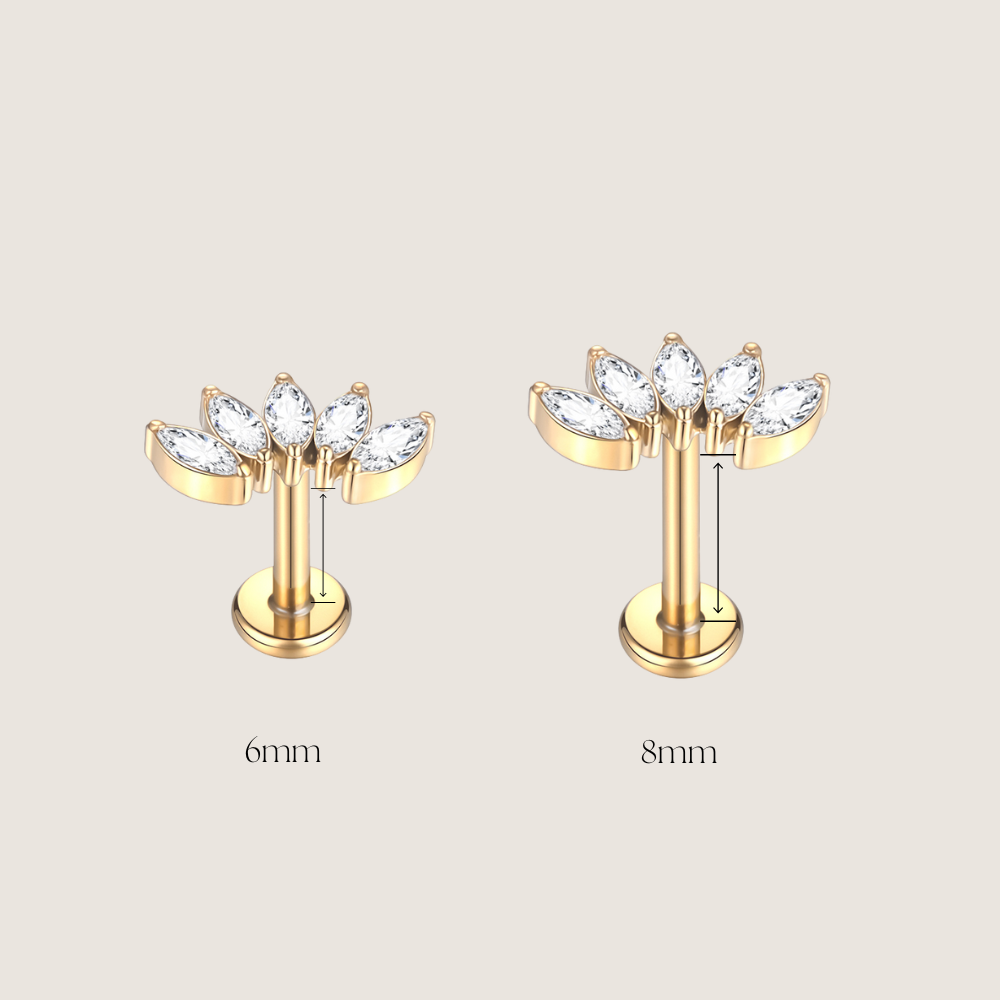
FLAT BACK LABRET
POST LENGTHS
The post length = Post length refers to the measurement from the inside of the flat back to the top of the post, just beneath where the jewellery front screws on.
At Cartilage Cartel, all flat back labret studs are available in 6 mm and 8mm. 6mm is the most common size we sell for a comfortable snug fit, however, 8mm is also extremely popular for thicker cartilage when a 6mm post may be too tight or snug.
Post length varies by individual and it is always best to measure the thickness or your cartilage or check with your piercer what size they recommend for you.